Last updated:
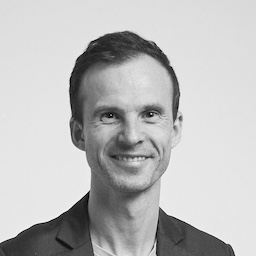
I see two ways to describe who I am:
- Through the harvest: the useful things I have put into the world for other people.
- Through the journey: the motivations, decisions, and feelings that brought me here.
Both have a right to exist.
What I have put into the world
This is not LinkedIn. Only things I can honestly say I brought into existence belong here.
Created and released Krashen, a podcast player for language learners.
Designed and assembled the only Touchwood table, then spent three months trying to turn it into a furniture brand. It found exactly one paying user.
A long, deep story
Work in progress. I am publishing this story as I write it, one chapter at a time.
I. The kid
I was born in 1985 with the surname Mikheev and spent the first four years of my life in Protvino, a Soviet research town built around the Institute for High Energy Physics (IHEP). My summers, however, were spent somewhere even more unusual: Krasnoyarsk-45, a secret, closed nuclear city in Siberia, where my grandfather ran the uranium-enrichment plant. But all I can remember are the giant nails in his garage and how I accidentally released the brakes on his Volga while playing, almost sending it into a ditch. The isotopes didn’t bother me much when I was three, and I don’t think they ever will.
My father was an accelerator control systems engineer at IHEP, and in 1989 he was selected to join a small team sent to CERN to help design the control system for the planned Soviet particle accelerator complex, so our family moved to the Geneva suburbs for nearly three years.
My mom was a beautiful, slender brunette who, I think, had the untapped potential to become an actress or a model. She was not an intellectual, and I’m sure she never really understood what my father did. I think of her as his loyal partner in everyday life and as the person who made sure that my brother and I were fed, clothed, and healthy, and that we never forgot to “do our homework.”
Those were fun years, and I had a happy childhood. I quickly learned French on the street. I started playing with LEGO at five, and somehow, despite barely making ends meet, my parents managed to travel quite a lot on a shoestring. They took me to Italy, France, and Switzerland and, in a way, programmed me to become European—whatever that means. Italy impressed me so much that I covered the backs of all our bingo cards with drawings of Michelangelo’s David. Perhaps someone should have seen this as a sign of my natural inclination toward drawing, but apparently no one did.
I remember that I liked math in second grade at my Swiss school but was completely bored at the Russian school I had to attend once a week.
II. How the boy learns and behaves
In 1992, we returned home—to a different country, now called Russia, but to the same little town of physicists, many of whom had already become construction workers as the empire’s nuclear ambitions faded. I spent the following years playing in the courtyard and building whatever I could imagine out of LEGO. I wasn’t exactly a leader, but somehow I was the glue that held our courtyard crowd together. I was definitely a coward, but I could run very fast. My parents managed to enroll me in nearly every sports club in town, though I think they kept choosing the wrong ones. Had they looked a little harder for the right sport, perhaps they could have made a footballer or biathlete out of me.
School remained boring to me. I think I learn in a particular way: through practice, by solving real problems when I am strongly motivated by the outcome. The system, however, demanded diligence and seemed to assume that knowledge could be absorbed without interest—or that interest would somehow emerge on its own. For me, interest had to resonate with something inside me, and the process itself had to pull me into a state of flow. Building a LEGO replica of a missile boat I had seen in a TV series did exactly that. So did hunting for May beetles under streetlights. Playing chess with my father did too, although I never stood a chance against him.
Computers, however, did not produce the same effect—at least not in a way that led me to coding. We often hear the same story about one Silicon Valley entrepreneur or hacker after another: they got access to a computer as a child, and it shaped their lifelong interests and eventually their career. One thing I still cannot understand, but very much want to, is why, despite having a Commodore 64 and a Commodore 128D at home as early as 1992, my interest went no further than learning how to load games from cassette tapes. It never sparked an interest in coding or making something myself.
My hypothesis is that I lacked a foundation, a community, or simply an example that resonated with me—something that would make me say, “Wow, I want to build that.” I don’t want to shift responsibility onto my father, as if he should have been my guide into this world and shown me what was possible. I remember that he even showed me BASIC, but it did not click. He had already done something right by not buying us a Dendy, Nintendo, or Sega console like the ones my friends had. Still, even later, when we got an Intel Pentium PC running Windows, I continued to see it as nothing more than a gaming machine.
Then, in eleventh grade, I learned that someone I knew from school had built a chat site for our town—basically a social network. That was the first time it struck me how cool it was to make something like that, but somehow I still wasn’t ready to try building anything myself.
That makes me sad today. But perhaps, even now that I know how to program, I am still caught in the same pattern. When I see guys building hardware startups—interceptor drones, cow collars, satellites—it feels as if there is a chasm between me and doing anything like that myself. So I understand my seventeen-year-old self perfectly well.
I think another pattern was at work too: approval-seeking. There were a couple of computer geeks in my class, but for reasons I still cannot explain, I wasn’t ready to join their crowd. I wanted people to like me and to be accepted into circles of people I admired—interesting, curious, high-achieving people. I especially wanted girls to like me, of course, but I also wanted smart, confident guys to see me as one of their own. I wanted to appear cool and fashionable. I used whatever tools were available: clothes and the stage.
I think I did well in theatre mostly because I could clown around, imitate people, pull convincing faces, and project emotion. But I intuitively understood that intelligence mattered too. I admired successful KVN performers—students competing in what was essentially a popular televised college comedy league. They seemed quick-witted and capable of subtle humor, and they represented the kind of intelligent, successful student I wanted to become. Those qualities could not be acquired overnight. My lack of reading showed, but I learned to imitate some of that wit, and sometimes it worked: fake it till you make it.
Approval-seeking did, however, push me to begin catching up academically. At some point I realized that if I could not get into at least a half-decent university in Moscow, I would simply be a loser and would once again fail to belong among the people I had started hanging out with. It would be humiliating—and I had no desire to serve in the army either.
Today, I feel ashamed when I think about what a show-off I was and how much of my behavior was shaped by the desire to be seen in a certain way. And I think it was only as I approached forty that I finally closed the gap between the image I projected and who I actually was. I can feel the difference: I have a much stronger sense of authenticity now. Life feels much better because of it, of course. Still, I suspect that finding this authenticity earlier would have helped me find my own path much sooner.